You find a job that fits. Then you notice the date: posted three weeks ago. Before you close the tab, check the employer's application page. Three weeks is not a universal cutoff. A role still accepting applications may be worth pursuing; a fresh-looking listing can still lead to a closed page.
The useful question is whether there is an application you can submit, for a role you can realistically do. The date is one clue in that decision.
Check these three things first
Start with the employer's own careers site. Navigate there from the company's website and find the same role, location and job ID where available. A copied listing or an unfamiliar application link is not enough.
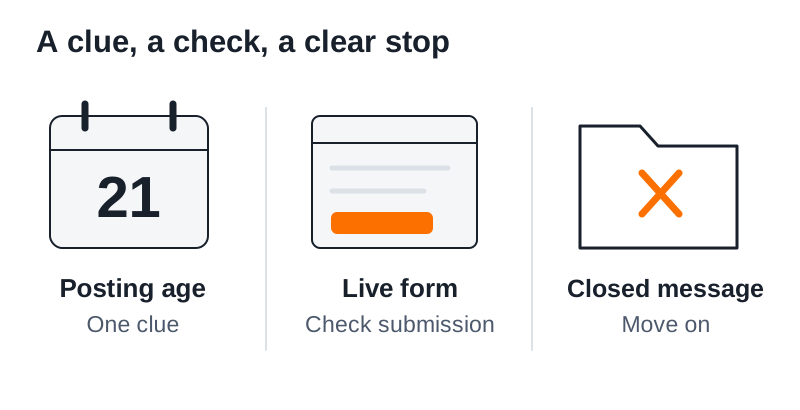
- Is this exact role still accepting applications? Open the application link. A live description alone does not settle it. Look for a closed-position message, an expired deadline or a form that no longer accepts responses.
- Do you meet the practical conditions? Check location, schedule, required licenses and other explicit eligibility requirements before investing in a rewrite. If a requirement is unclear, seek clarification rather than choosing the answer that gets you through.
- Can you show relevant experience? Identify the main responsibilities and find real examples of doing that work. A strong example is a better reason to proceed than the age label is a reason to stop.
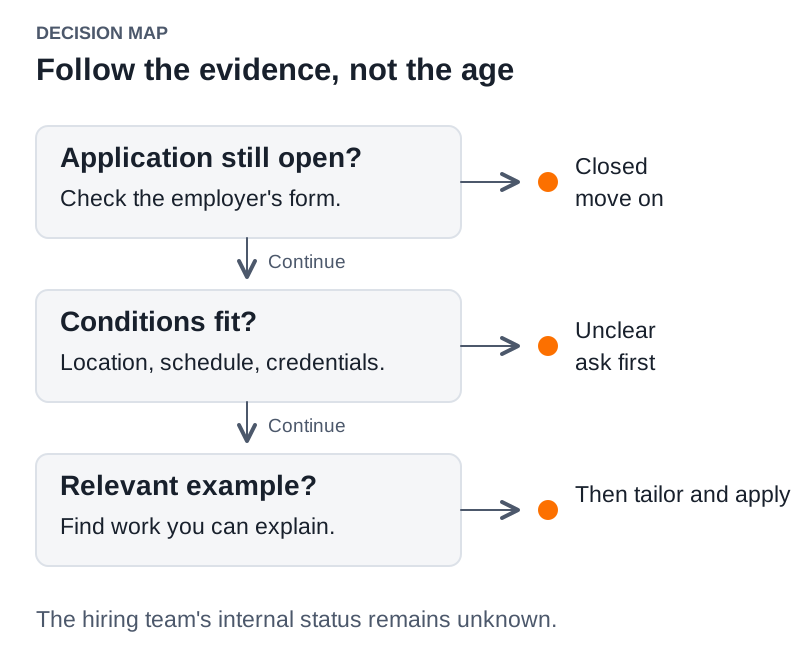
If all three checks look good, applying is reasonable. Keep searching while you wait. An open application form is evidence that a submission route exists, not a promise that someone will review new applicants.
Posted, first seen and last checked are different dates
Imagine this sequence. An employer lists a role on September 1. A search service first discovers it on September 5. It checks the page again on September 22.
The role was not newly posted on September 22. That is simply the most recent check. This is an illustrative timeline, not a measured JobShifu posting.
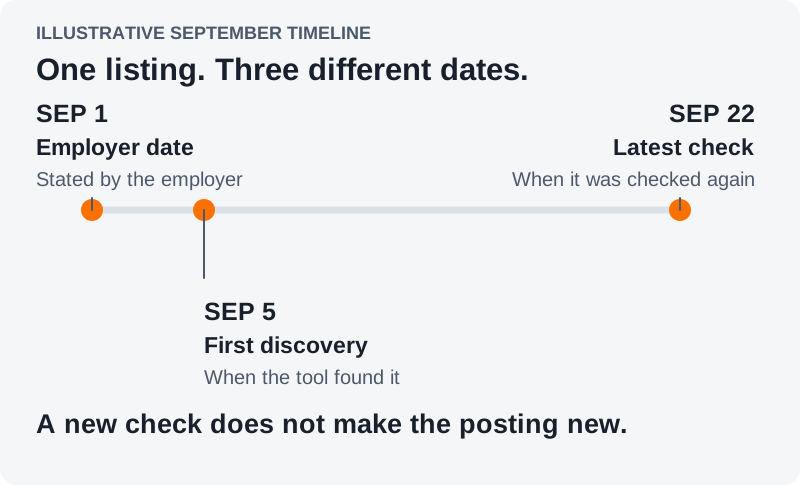
- Posted date: the date supplied by the employer or source, when available.
- First seen: when the service first observed that listing. It may already have been online.
- Last checked: when the service most recently checked it. Read the reported result alongside the timestamp.
JobShifu's posting-lifespan research describes observed posting availability and its measurement limits. Rechecked daily on employers' own career pages, 62% to 76% of postings were still listed three weeks after they first appeared, so a three-week-old posting is more often still up than gone. Posting duration is not time to hire, and a dataset cannot determine whether a particular recruiter is still reviewing candidates. [1]
Decide how much work the application deserves
An older listing does not need a special resume strategy. It needs the same fit check as any other role, followed by a sensible decision about effort.
| What you find | A useful next step |
|---|---|
| Employer form accepts applications, deadline is ahead, relevant experience is clear | Tailor the application and submit it. Continue searching afterward. |
| The role exists, but eligibility or closing date is unclear | Ask a concise question if an employer contact is available. |
| The employer says applications are closed | Look for another current opening. Do not rely on a board's cached copy. |
| The listing says it collects interest for future roles | Treat it as a future-interest application, not evidence of an immediate vacancy. |
| You already applied to the same job ID | Check your application record before submitting a duplicate. |
For the uncertain case, a brief message can be enough: "I'm interested in the [role title], reference [job ID]. Is the team still accepting applications for this opening?" Use a published recruiting contact. You do not need to track down employees' personal details.
A repost is not a verdict on your application
A role appearing again does not, by itself, mean you were rejected. Indeed describes several reasons for reposting, including changed requirements, renewed listings and a wider candidate search. The listing alone does not identify which reason applies. [2]
Compare the job ID and requirements before applying again. If the employer provides instructions for previous applicants, follow those. If you already have a recruiter contact, ask whether your existing application remains under consideration.
Make the next step smaller
If the role clears your checks, save the employer link and the date you checked it. Then choose the experience that makes your fit easiest to understand. The manual resume-tailoring guide walks through selecting and presenting relevant experience.
JobShifu's job-status guide explains the checks and their limits. For other opportunities, browse employer-sourced jobs. Neither direct sourcing nor a recent check guarantees active hiring.
Common questions
Is a month-old job automatically too old?
No universal age threshold can answer that. Check the employer's current application route, deadline and requirements. Treat an explicit closure as stronger information than a date shown on another site.
Does a removed posting mean I was rejected?
A removed listing does not tell you the decision on your application. Use the employer's application portal or an existing recruiter contact for your status.
Should I wait for the job to be reposted?
If the current role accepts applications and fits your experience, there is no need to wait for a newer date. Follow any deadline or instructions the employer gives.
Sources
- JobShifu, How long do job postings stay open?, consulted September 15, 2026. First-party research; see the report's observation window and limitations.
- Indeed Editorial Team, What to do if a job is reposted after your interview, updated June 15, 2026; consulted September 14, 2026.