Search for "H-1B sponsors" and every result is the same artifact: a republished USCIS table. Those tables are genuinely public record, and genuinely useful, and they all share one blind spot. An approval filed in fiscal year 2022 says nothing about whether that employer has a single job open this week. Sponsor lists answer "who sponsored". Job boards answer "who is hiring". Nobody joins the two, because doing it requires watching employer career sites continuously, at scale.
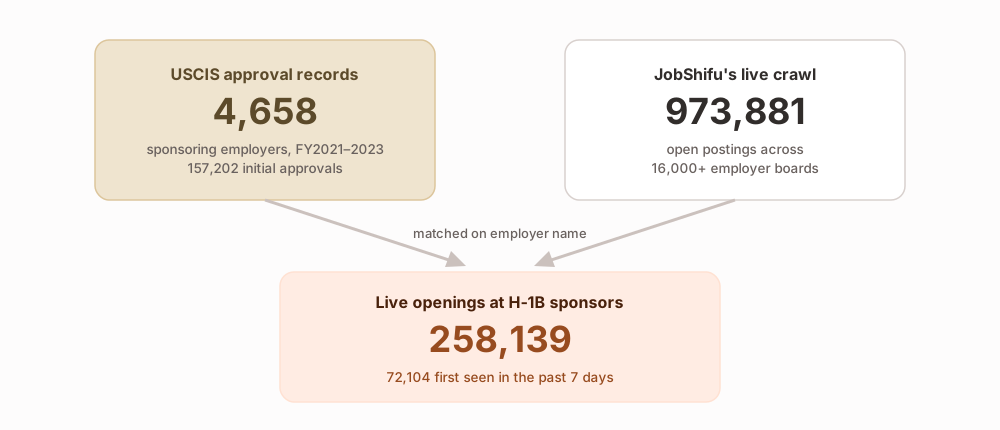
JobShifu already does that for other reasons, and this post is published by JobShifu: the posting side of the join is its own crawl, and the method for checking it is at the bottom. That crawl covers 10,783 employer boards carrying at least one live opening, and held 973,881 open postings on the day of measurement. Joined against the USCIS Employer Data Hub approval records, fiscal years 2021 through 2023: 4,658 sponsoring employers, carrying 157,202 initial approvals, matched by employer name to the postings that are open right now. Every number below comes from that join, measured on 8 August 2026.
One in four open jobs is at an H-1B sponsor
Of the 973,881 open postings in the corpus on measurement day, 258,139 sit at an employer with at least one H-1B initial approval in FY2021 to 2023. That is about one in four. And this is not a stale pile: 72,104 of those postings, more than a quarter, first appeared within the previous seven days.
If you need sponsorship, that is the useful denominator. The question was never "do sponsors exist". It is "how much of what is open today is at an employer with a sponsorship track record", and the answer is: a lot, refreshed weekly.
The part the static tables cannot show: sponsors who are not hiring
The most striking number in the join is this one. Across the 3,693 named employers in the match, the median sponsor has exactly 2 live openings, and 1,114 of them, about 30%, have zero. Even restricting to employers whose boards were crawled within the past week, so the zero is real rather than a coverage gap, 286 of 1,636, about 17%, list nothing at all.
A republished USCIS table cannot tell you this. It will happily send you to polish an application for an employer that sponsored someone in 2022 and has no open requisition today. The record is true and the advice it implies is stale. Meanwhile 355 sponsoring employers each hold 100 or more live openings. The whole game is knowing which kind you are looking at, this week.
Who sponsors most is not who is hiring most
Rank the matched employers by FY2021 to 2023 initial approvals, then look at what is actually open on their boards, and the two leaderboards come apart.
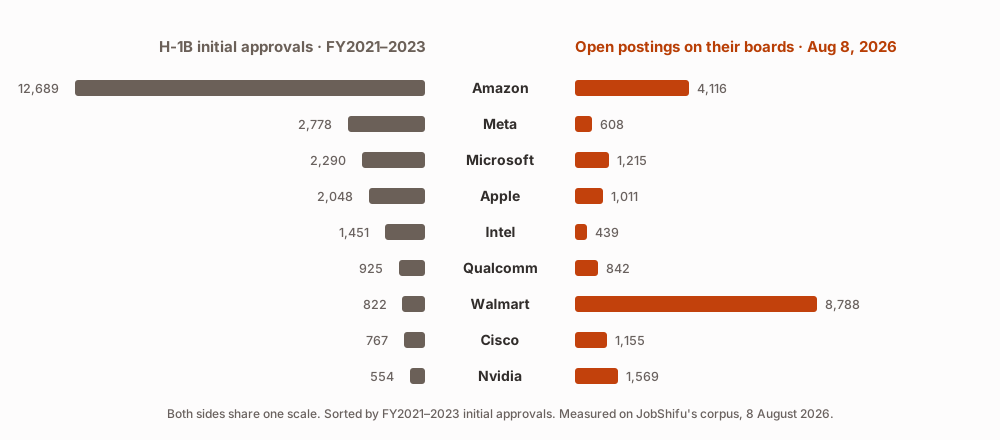
Amazon leads both lists, 12,689 initial approvals and 4,116 live openings, and after that the order falls apart. Walmart sits far down the approval table at 822 and had 8,788 openings live, the most of any employer in the chart. Intel holds nearly three times Walmart's approvals and had 439. Nvidia, with the fewest approvals of the nine, had 1,569 openings, more than Microsoft or Apple. Qualcomm is the quiet standout: 925 approvals against 842 live openings, the closest the two columns come to agreeing.
One caveat belongs on that chart: several giants at the top of the USCIS table run career sites the crawler does not cover, including Tata Consultancy Services (6,467 approvals), Cognizant (5,058), Wipro (3,459), Google (3,071) and Deloitte (2,208). They are left off rather than shown with a near-zero that would measure a blind spot rather than their hiring. That is also the reminder of what this data is: postings on the boards JobShifu crawls, not a census of every job on Earth.
Where the sponsor-friendly openings actually are
Among postings the tagger has categorized, openings at sponsoring employers skew hard toward software: 20.1% of sponsor-employer openings are software engineering roles, versus 12.4% across the whole corpus. One in five against one in eight. Data and analytics over-indexes too, 8.9% against 7.1%.
The inversion is health care. Nursing and allied health is 7.3% of sponsor openings but 9.4% of the corpus, and medical and clinical roles 5.2% against 8.7%. Sponsoring employers as a group post proportionally fewer clinical jobs than the market does, which matches what the H-1B program mostly is in practice, and is worth knowing before you assume the filter helps every field equally.
Where to start if you need visa sponsorship
- Check the live board, not the league table. An employer's 2022 approvals are a track record, not an opening. The question that pays is whether they have your role open this week.
- Treat freshness as part of the filter. 72,104 sponsor-employer postings were new within seven days of measurement. The queue a late application arrives into is harder still when the applicant pool is visa-constrained.
- Verify sponsorship per role. A sponsoring employer is not a promise about one specific requisition. Some post roles that are explicitly ineligible. The track record gets you to the right doors; the job description and the recruiter answer for the door itself.
JobShifu ships this join as a filter: visa sponsorship marks openings at employers with a USCIS approval record, right in the feed, next to how fresh the posting is. The same mechanism as this post, running on every crawl.
Common questions
How do I find companies that sponsor H-1B visas?
The public record is the USCIS Employer Data Hub, which lists approvals by employer and fiscal year. It answers who has sponsored, not who is hiring, and those are different questions. Joining that record to a live crawl of employer career sites is what turns a track record into roles you can apply to this week.
Does a company that sponsored an H-1B before still sponsor now?
A past approval is a track record, not an opening, and often not even that. Across the 3,693 named employers in this join the median sponsor had exactly 2 live openings, and 1,114 of them, about 30%, had none at all. Restricting to employers whose boards were crawled within the previous week, so that a zero is real rather than a coverage gap, 286 of 1,636 still listed nothing.
Which jobs are most likely to offer visa sponsorship?
Openings at sponsoring employers skew hard toward software: 20.1% of them are software engineering roles, against 12.4% across the whole corpus. Data and analytics over-indexes as well, at 8.9% against 7.1%. Health care inverts, with nursing and allied health at 7.3% of sponsor openings against 9.4% of the corpus, so the filter does not help every field equally.
Does a sponsoring employer mean any of its jobs come with sponsorship?
No. A sponsoring employer is not a promise about one specific requisition, and some post roles that are explicitly ineligible. The track record gets you to the right doors. The job description and the recruiter answer for the door itself.
Method
- Approval counts are company-level aggregates from the public USCIS Employer Data Hub, fiscal years 2021 through 2023, the newest full years available. FY2023 ended in September 2023; treat the record as a track record, not this quarter's policy.
- Live posting counts are open postings on employer boards JobShifu crawls, measured 8 August 2026. The crawler keeps roughly a rolling 30-day window per board, so large employers' counts are floors, not totals, and coverage varies by employer, which is why uncovered employers are excluded rather than shown as zeros.
- The board count is boards carrying at least one live opening, with Workday counted per tenant. Boards crawled but currently empty are not included, which is why this figure is smaller than a raw count of everything ever fetched.
- Employers were matched by normalized employer name; 40% of the 258,139 total rests on alias and fuzzier name matches (Amazon's USCIS filings, for instance, span multiple legal entities), and the per-employer figures above use only exact and curated alias matches.
- Corpus history begins in late June 2026, so this post makes no trend claims. These are measurements of one week, stated as such.
- Published figures are aggregates and per-company counts only, never republished posting text.