Every published list of "the most in-demand skills" comes from asking employers, or from a jobs-board press release counting search terms. Reading the postings themselves at scale is not something anyone does by hand.
We did it by machine. JobShifu runs a crawler over employer career pages, and a background lane reads every posting into structured requirements: each line pulled out separately, tagged with the skills it names, and kept alongside the exact sentence it came from.
As of 13 August 2026 that lane had read 500,000 live job postings. Here is what employers are actually asking for, what those skills pay, and which of them will let you change industries later.
Key findings
- The highest-paying skill in the corpus is Rust, at a median advertised salary of $152,900.
- The ten highest-paying skills and the ten most in-demand skills have zero overlap. Not one skill appears on both lists.
- The most in-demand skill in America is not a technology. It is Patient Care, named in 67,280 open postings.
- Some skills lock you into one industry and some travel. 95.1% of postings naming "Registered Nurse" are in one field. SQL manages 48.6%: the most evenly spread technical skill in the demand top ten.
- Two of the most-cited "top skills" lists in circulation are measuring boilerplate. See how we counted.
Which skills pay the most?
Median advertised salary across every open posting that names the skill and states a salary.
| Skill | Postings | Median salary |
|---|---|---|
| Rust | 777 | $152,900 |
| Go | 431 | $146,300 |
| Kotlin | 472 | $146,240 |
| Computer Vision | 1,169 | $146,000 |
| PyTorch | 1,013 | $145,000 |
| Distributed Systems | 3,254 | $142,800 |
| GraphQL | 680 | $142,300 |
| Deep Learning | 703 | $142,200 |
| MLOps | 863 | $140,000 |
| TypeScript | 2,586 | $140,000 |
| Ruby | 526 | $140,000 |
| SOC 2 | 840 | $140,000 |
| MEDDIC | 436 | $140,000 |
| M&A | 1,653 | $139,200 |
| Design Systems | 1,049 | $137,600 |
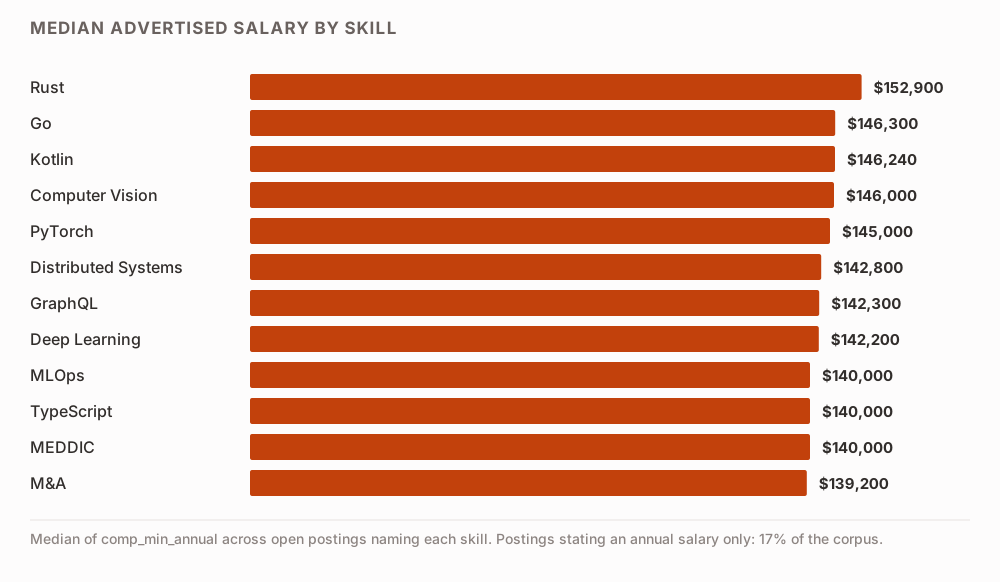
Three things stand out. The top is systems languages and machine learning, not the frameworks that dominate job-board marketing. MEDDIC, a sales qualification methodology, pays $140,000 and is the only non-engineering skill in the top ten by a wide margin. And the counts are small: Rust appears in 777 salaried postings against Python's 45,107. The best-paying skills are best-paying partly because almost nobody is hiring for them.
Which skills are most in demand?
Ranked by how many open postings name them.
| Skill | Postings | Field | Share of postings in that field |
|---|---|---|---|
| Patient Care | 67,280 | Nursing & Allied Health | 59.1% |
| Python | 45,107 | Software Engineering | 67.8% |
| Agile | 39,230 | Software Engineering | 52.0% |
| Registered Nurse | 37,299 | Nursing & Allied Health | 95.1% |
| BLS | 30,635 | Nursing & Allied Health | 76.5% |
| SQL | 29,625 | Software Engineering | 48.6% |
| AWS | 27,499 | Software Engineering | 70.4% |
| CI/CD | 24,514 | Software Engineering | 87.5% |
| CPR | 22,816 | Nursing & Allied Health | 61.2% |
| Business Development | 22,764 | Sales & Account Mgmt | 45.0% |
| Azure | 21,151 | Software Engineering | 70.0% |
| Java | 17,945 | Software Engineering | 86.8% |
| Salesforce | 17,452 | Sales & Account Mgmt | 46.4% |
| Forklift Certification | 17,029 | Logistics & Warehouse | 73.7% |
| DevOps | 15,755 | Software Engineering | 79.4% |
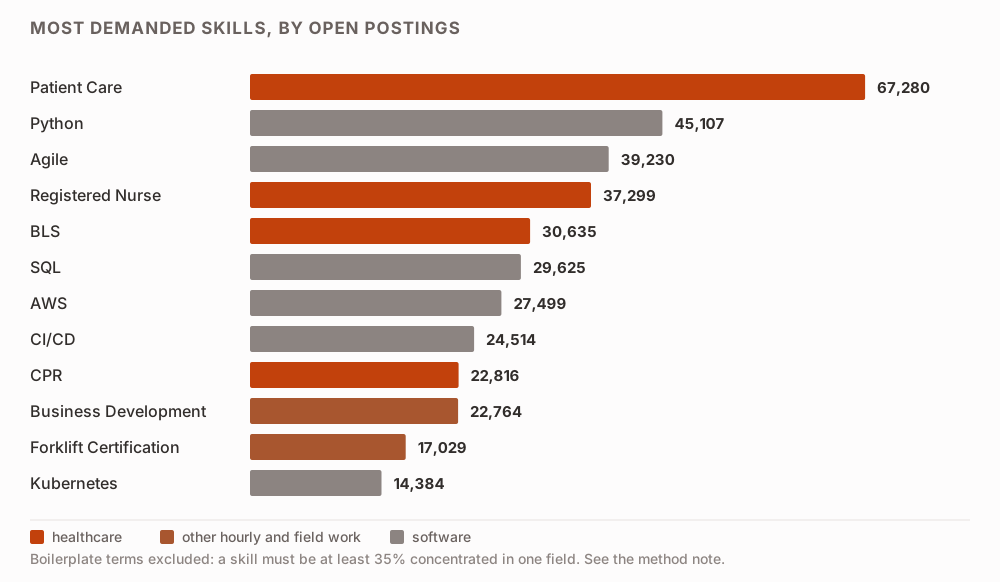
Healthcare takes three of the top five. Patient Care is named in 67,280 open postings, half again as many as Python. Basic Life Support certification outranks SQL. And Forklift Certification appears in more open postings than Kubernetes: a fact that will not appear in any technology trend report, because those reports only count technology jobs.
The highest-paid skills are not the most demanded ones
Put the two lists side by side and not a single skill appears on both.
That is the most useful thing in this study. The skills that pay the most are scarce by definition: 777 postings want Rust, and they pay a premium because there is a small pool of people who can do it. The skills most in demand are the ones the economy actually runs on, and volume drives their price down rather than up.
If you are choosing what to learn, those two lists answer different questions. The pay list tells you where the ceiling is. The demand list tells you where the jobs are.
Which skills let you change industries?
A skill that appears across many fields travels with you. A skill concentrated in one field is a door that only opens one way. The concentration column in the demand table above measures this directly.
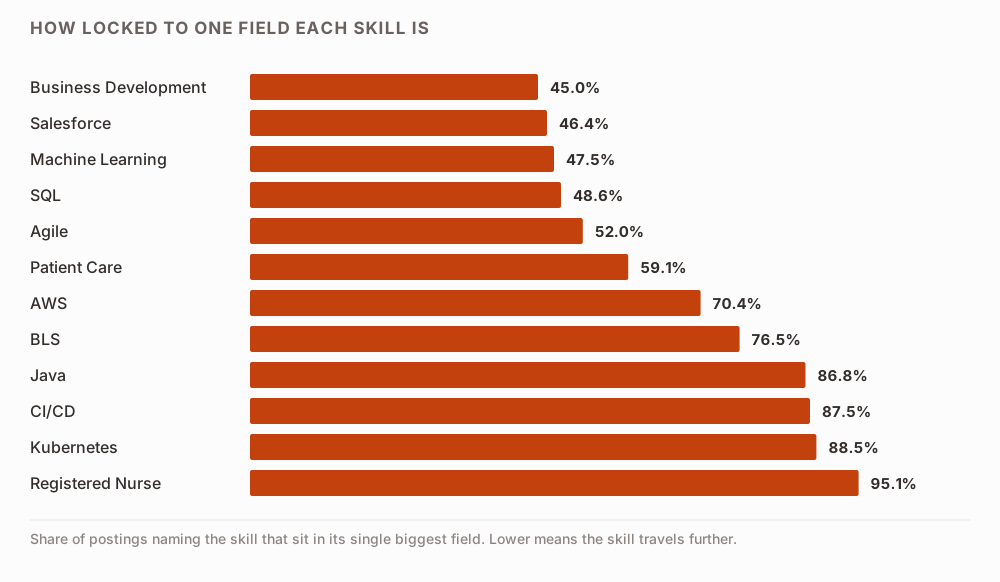
The most portable skills we measured:
- Business Development: 45.0% in its top field
- Salesforce: 46.4%
- Machine Learning: 47.5%
- SQL: 48.6%
- Agile: 52.0%
The most locked-in:
- Registered Nurse: 95.1% of postings in a single field
- Kubernetes: 88.5%
- CI/CD: 87.5%
- Java: 86.8%
- BLS: 76.5%
SQL is the quiet winner here. It is the sixth most demanded skill in the corpus and the most evenly spread technical skill in that top ten: finance, operations, marketing and healthcare analytics all ask for it. Kubernetes pays better and goes almost nowhere else.
How strict are job postings?
One number for context, since it shapes how you should read every list above. The average posting names 15.75 requirements and presents 86.8% of them as mandatory rather than preferred. About one posting in five marks every single requirement as mandatory, with nothing optional at all.
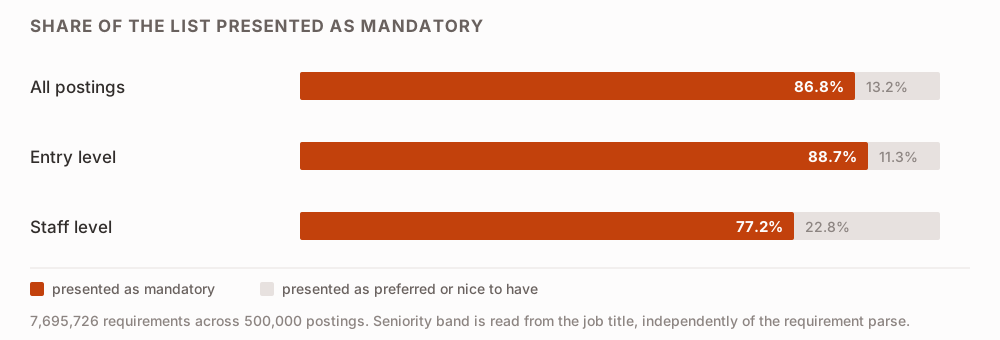
Entry-level postings are the strictest of all, at 88.7%, against 77.2% for staff-level roles. Seniority does not buy you a shorter list. It buys you permission to be a partial match.
What this means if you are applying
- Do not pick a skill off a pay ranking alone. Rust pays $152,900 and appears in 777 salaried postings. That is a ceiling, not a job market.
- Check the concentration before you specialise. If a skill sits above 85% in one field, you are choosing that field as well as that skill.
- SQL is the highest-leverage thing on both lists. Top-ten demand, most portable, and it shows up in finance and operations postings, not only engineering ones.
- Do not self-reject on a long list. 86.8% of requirements are framed as mandatory, but four postings in five still mark something optional, and entry-level lists are as long as senior ones.
JobShifu's fit score reads a job description the same way this study did and shows which of its requirements your experience already covers. Resume tailoring then proposes changes against facts you have confirmed, rather than inventing new ones.
Common questions
Should I apply if I do not meet every requirement?
The average posting names 15.75 requirements and frames 86.8% of them as mandatory, so a long mandatory list is the norm rather than a signal about one particular employer. About one posting in five marks every requirement mandatory, which means four in five still mark something optional. Entry-level postings are the strictest measured, at 88.7% against 77.2% for staff-level roles, so a long list is not evidence that a role is senior.
Does a higher-paying skill mean there are more jobs in it?
The opposite, in this corpus. Not one skill appears in both the ten highest paying and the ten most in demand. Rust is the highest paid at a median of $152,900 and appears in 777 salaried postings, against 45,107 for Python. Scarcity is part of what puts a skill at the top of the pay list, so a pay ranking describes a ceiling rather than a job market.
Do these salary figures cover every job?
No. Salary coverage in the corpus is 17%, because the pay table can only include postings that state an annual salary, and disclosure skews toward office roles and pay-transparency states. Read that table as the highest-paying skills among jobs that publish a salary, not as a claim about the whole market.
Why are "Recruiting" and "Compensation and Benefits" missing from the demand ranking?
Because they are boilerplate rather than demanded skills. Ranked by raw frequency they are the two most common tagged terms in the corpus, at 125,743 and 87,541 postings. Recruiting is tagged on 12,710 software engineering postings, where it comes from sentences like "our recruiting team will be in touch", and Compensation and Benefits comes from the benefits paragraph every posting carries. A term has to be at least 35% concentrated in a single field to appear in these rankings.
How we counted
- Dataset. The JobShifu Posting Corpus: 500,000 live job postings, measured 13 August 2026. Corpus history begins 23 June 2026; the initial bulk-load week of 22 June is excluded.
- Skills come from a curated dictionary, not free text, so "AWS" and "Amazon Web Services" count once.
- ⚠️ We excluded boilerplate, and this matters. Ranked by raw frequency, the two most common "skills" in the corpus are Recruiting (125,743 postings) and Compensation and Benefits (87,541). Both are artifacts: Recruiting is tagged on 12,710 *software engineering* postings, because postings say "our recruiting team will be in touch". Compensation and Benefits comes from the benefits paragraph every posting carries. Any list that ranks by raw count will put these at the top. We require a skill to be at least 35% concentrated in a single field, which drops terms that appear everywhere because they are filler. Intellectual Property passed that bar at 36.1% and was still excluded by hand, because its top field is software engineering, which points at IP-assignment clauses rather than a demanded skill.
- Salary coverage is 17%. The pay table covers only postings that state an annual salary, and disclosure skews toward office roles and pay-transparency states. This is the highest-paying skills among jobs that publish a salary, not a claim about the whole market.
- Not a random sample. Parsing is a background queue rather than user-driven, but coverage varies by job board, and 73% of parsed postings come from a single applicant-tracking system.
- Aggregates only. No posting text, employer name, or individual listing is published here.